About Ball Valve
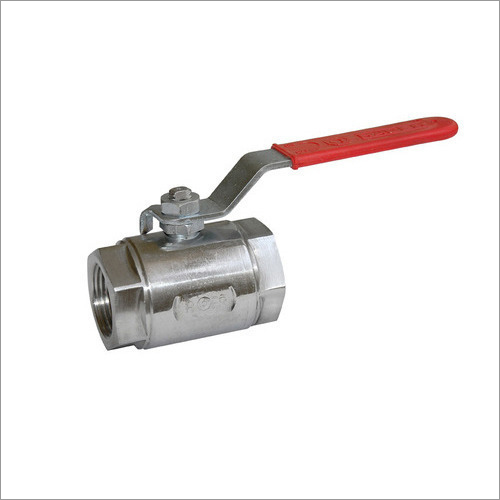
A Ball Valve is a valve with a spherical disc, the part of the valve which controls the flow through it. When the valve is closed, the hole is perpendicular to the ends of the valve, and flow is blocked. The handle or lever will be inline with the port position letting you "see" the valve's position. Ball valves are durable and usually work to achieve perfect shutoff even after years of disuse. They are therefore an excellent choice for shutoff applications (and are often preferred to globe valves and gate valves for this purpose). They do not offer the fine control that may be necessary in throttling applications but are sometimes used for this purpose.The body of ball valves may be made of metal, plastic or metal with a ceramic center. The ball is often chrome plated to make it more durable.
Tags:
- Ball Valves
- Industrial Valves
- Pneumatic valves
- Pneumatic Accessories
Available sizes:
- 1/4", 1/2", 3/4", 1", 1 1/2", 2"
Reliable Control for Diverse MediaEngineered for use across water, oil, gas, and chemical industries, this ball valve provides consistent and reliable flow control. Its sturdy brass construction combined with a polished finish offers both longevity and aesthetic appeal, while the PTFE seats ensure excellent chemical compatibility and leakage protection.
Versatile Installation OptionsAvailable with screwed or flanged end connections and supporting BSP, NPT, or custom threads, this valve integrates seamlessly into existing piping systems. With dimensions ranging from standard to custom, it accommodates a variety of industrial piping configurations, making it suitable for numerous installations.
Enhanced Safety and PerformanceThe valve's high corrosion resistance and Class VI leakage standard provide an added layer of operational safety. With a temperature range of -20C to 180C and pressure capabilities up to 1000 PSI, users benefit from a product designed for heavy-duty, reliable performance under demanding conditions.
FAQ's of Ball Valve:
Q: How is the ball valve operated and what are its advantages?
A: This ball valve is manually operated using a quarter-turn (90 rotation) handle made from vinyl-coated steel. This design ensures rapid on/off control and offers a comfortable grip, reducing operator fatigue and enabling quick shutoff or flow adjustment in industrial settings.
Q: What types of fluids and environments is this valve suitable for?
A: The valve is engineered for use with water, oil, gas, and chemicals. Its high corrosion resistance and PTFE (Teflon) seat make it ideal for harsh industrial environments where chemical compatibility and durability are crucial.
Q: Where can this ball valve be installed?
A: It can be mounted in a wide range of applications, from processing plants to utility pipelines, using either screwed or flanged end connections. The availability of BSP, NPT, or custom thread options allows installation in existing systems nationwide.
Q: What process ensures leak-tight performance in this ball valve?
A: The combination of full bore design and PTFE seat material achieves Class VI leakage performance, recognized for its stringent zero-leakage standard. This makes the valve particularly suitable for applications requiring maximum containment and process safety.
Q: When should I choose a brass ball valve with a polished finish?
A: Opt for this type when you need a balance of mechanical strength, corrosion resistance, and visual appeal. The polished brass construction is especially advantageous in environments where both performance and aesthetics are valued.
Q: What are the benefits of full bore design in this ball valve?
A: A full bore design allows unrestricted flow through the valve, minimizing pressure drop and ensuring optimal process efficiency. This benefits industries where maintaining consistent flow rates and reducing energy losses are essential.






 Send Inquiry


 Get a Quote
 Send Inquiry

 Send Inquiry
 Send Inquiry
 Send SMS
 Call Me Free


 English
 Spanish
 French
 German
 Italian
 Chinese (Simplified)
 Japanese
 Korean
 Arabic
 Portuguese